null
Cheapest Prices In UK
Same Day Dispatch
on Orders before 4pm
Earn Reward Points
On Every Order
Free UK Delivery
on all orders over £25

UK Vape Tax 2026 Guide: Understanding The Vaping Products Duty

Rising Costs & New Regulation Explained

From 1 October 2026, a new tax will be added to e-liquid sold in the UK. We break down the Vaping Products Duty, how much it could add to vape prices and what the changes really mean for vapers.

Introduction

There is a significant change coming to UK vaping this October. If you've already heard figures being thrown around about the new "vape tax", you might understandably be wondering what is actually changing and, more importantly, how much more you're likely to pay for the products you regularly use.

From 1 October 2026, the UK will introduce the Vaping Products Duty (VPD), placing an excise duty of 22p on every millilitre of vaping liquid. Once VAT is taken into account, the additional tax impact works out at 26.4p per ml.

That might not immediately sound like a dramatic increase, particularly when you're thinking about a single millilitre of e-liquid. Apply the same calculation to 10ml bottles, prefilled pods and larger shortfills, however, and the scale of the change becomes much easier to understand.

At Go Smoke Free, we've been following the development of VPD since it was first announced, and with its introduction now getting closer, we want to cut through some of the confusion surrounding it. This guide will explain what is being taxed, which products are affected, what we know about potential price increases and what remains difficult to predict.

What Is the Vaping Products Duty?

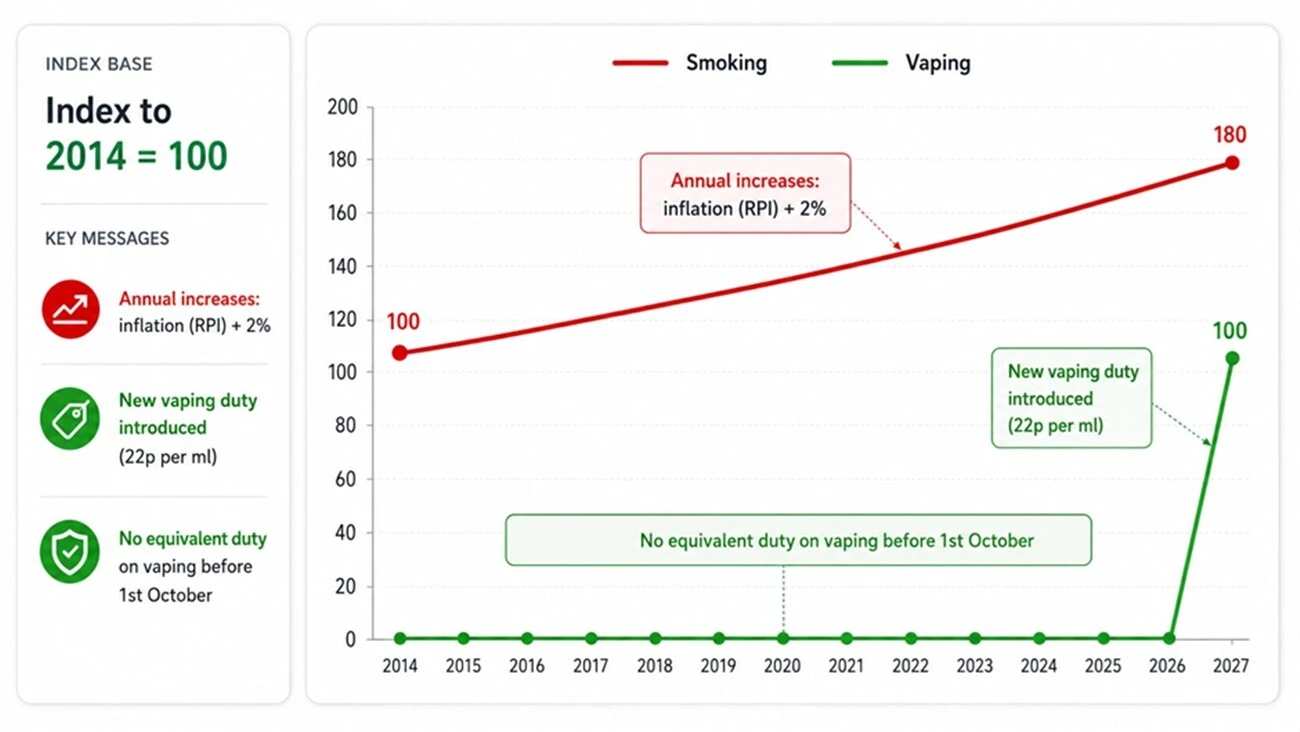
The Vaping Products Duty is a new UK excise duty specifically applied to vaping liquid. Until now, vape products have been subject to VAT, but there hasn't been a separate excise duty on e-liquid equivalent to the duties applied to products such as tobacco.

That changes on 1 October 2026, when VPD will be charged according to the volume of vaping liquid contained within a product.

HMRC has confirmed a single flat rate of £2.20 per 10ml of vaping liquid, equivalent to 22p per ml, regardless of whether the liquid contains nicotine. This means the amount of nicotine in your e-liquid doesn't determine how much VPD is charged.

You can read the full calculation rules and examples in the government's HMRC guidance on paying Vaping Products Duty.

For customers, the easiest way to understand the new tax is to look at how that rate scales with the amount of vaping liquid you're buying:


Amount of vaping liquid Vaping Products Duty Duty + VAT impact
2ml £0.44 £0.52
10ml £2.20 £2.64
50ml £11.00 £13.20
100ml £22.00 £26.40


The final column is particularly useful when thinking about what customers could eventually pay. A 10ml bottle doesn't simply carry another £2.20 of duty; once VAT is factored into the calculation, the additional tax impact becomes £2.64. Scale that up to a 100ml shortfill and you're looking at £26.40 before considering any other changes to manufacturing, distribution or retail costs.

That's why the volume-based structure of VPD matters so much.
When Does the UK Vape Tax Start?

The Vaping Products Duty comes into effect on 1 October 2026, with manufacturers and importers required to account for the new duty on liable products released for UK consumption from that date. New liable products will also need to comply with the Vaping Duty Stamps Scheme.

There is then a transition period for products manufactured or imported before VPD comes into force. Existing qualifying stock can remain on sale without a duty stamp during this period, but from 1 April 2027, all vaping products held outside duty suspension in the UK must carry either an appropriate transitional or digital duty stamp.

That transition is important because it means customers could temporarily see older pre-duty stock alongside newer products carrying VPD. We'll come back to this later in the guide, as it could create some initially confusing price differences between flavours, strengths and even products within the same range.

For retailers wanting more detail, HMRC has published separate guidance for businesses selling vaping products in the UK.

Which Vape Products Will Be Taxed?

One of the easiest misconceptions to make is that VPD is simply a blanket tax on anything described as a vape. In reality, the duty applies to vaping liquid, which means the amount of liquid contained within a product determines the tax liability.

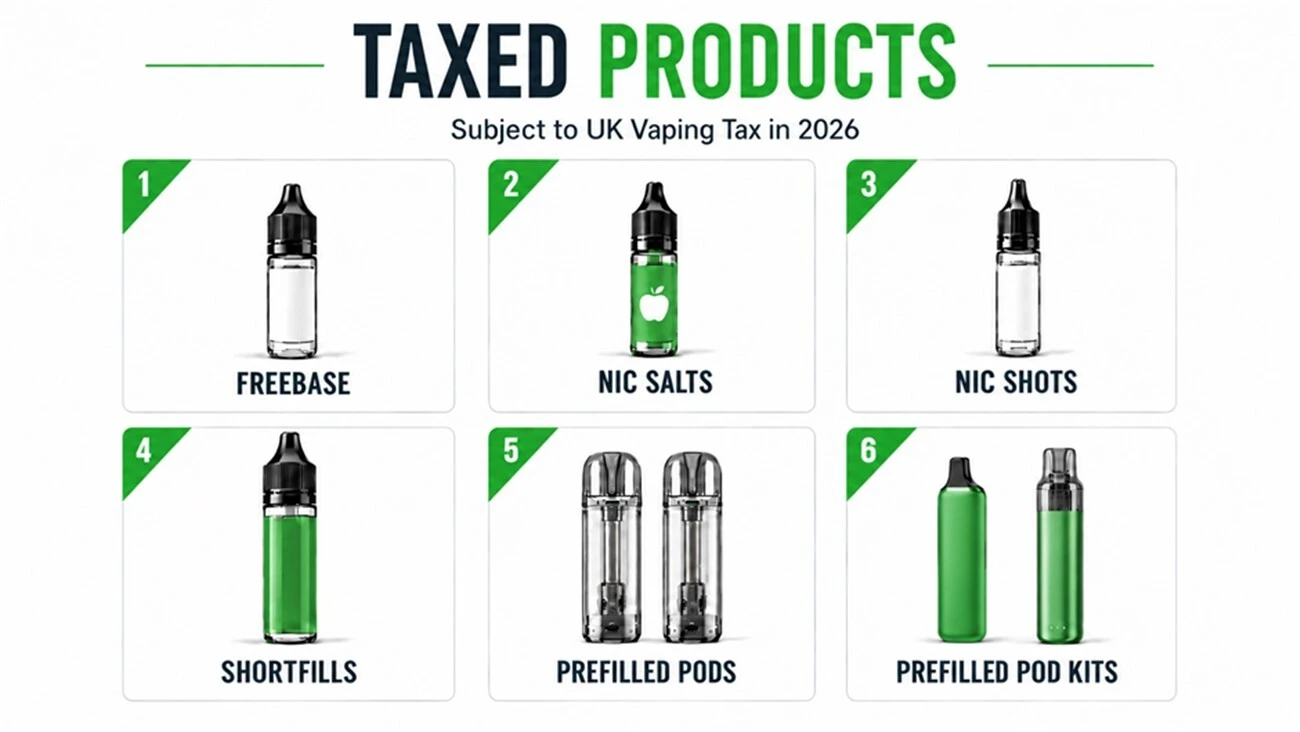
HMRC's definition covers vaping liquid whether or not it contains nicotine, including liquid supplied in bottles, cartridges and pods. It also covers substances intended for vaping such as PG, VG and flavourings.

For most customers, that means VPD will affect products including:

  • 10ml e-liquids.
  • Nicotine salt and freebase e-liquids.
  • Shortfills.
  • Liquid contained within prefilled pods.
  • Auto-refill containers used by larger prefilled pod systems.
  • Nicotine-free vaping liquids.

Nicotine strength doesn't change the rate, so moving from a 20mg e-liquid to a 10mg or nicotine-free alternative won't remove the duty. What matters for VPD is the amount of vaping liquid in the product.

What About Vape Kits and Devices?
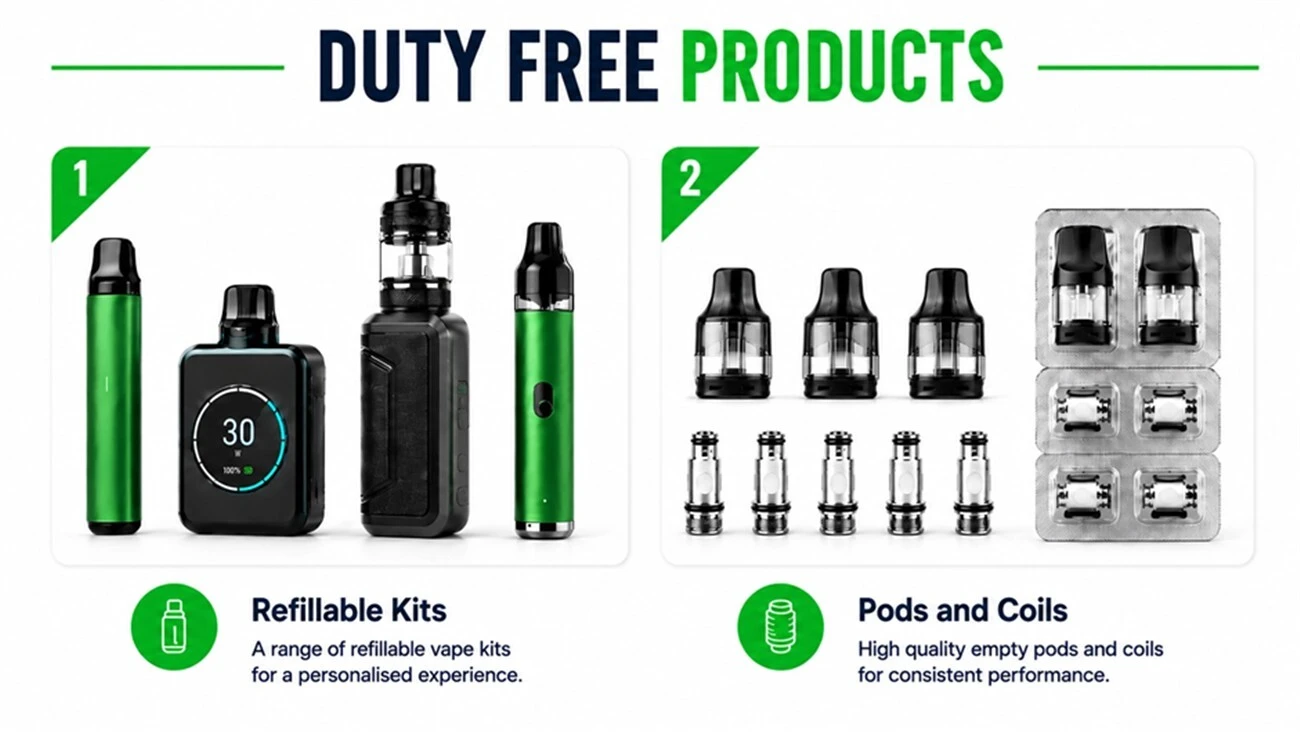
Standalone hardware isn't taxed according to its battery capacity, power output or purchase price under VPD because the duty is calculated against vaping liquid.

That means the ongoing impact will look different depending on the type of vape kit you use. Someone with a refillable vape kit, for example, will primarily encounter VPD when buying bottled e-liquid rather than when purchasing the hardware itself.

The distinction becomes particularly important with prefilled pod kits. While the rechargeable device isn't what generates the per-millilitre duty, the e-liquid supplied with the kit and contained within replacement prefilled vape pods or auto-refill containers is taxable.

For vapers, this means the biggest long-term change isn't necessarily going to be the price of the device sitting in your pocket. It's the cost of the liquid-containing products you repeatedly buy to keep using it.

How Much Extra Will Vaping Products Duty Actually Add?
The easiest way to make sense of the new duty is to move away from price-per-millilitre calculations and look at the products people actually buy.

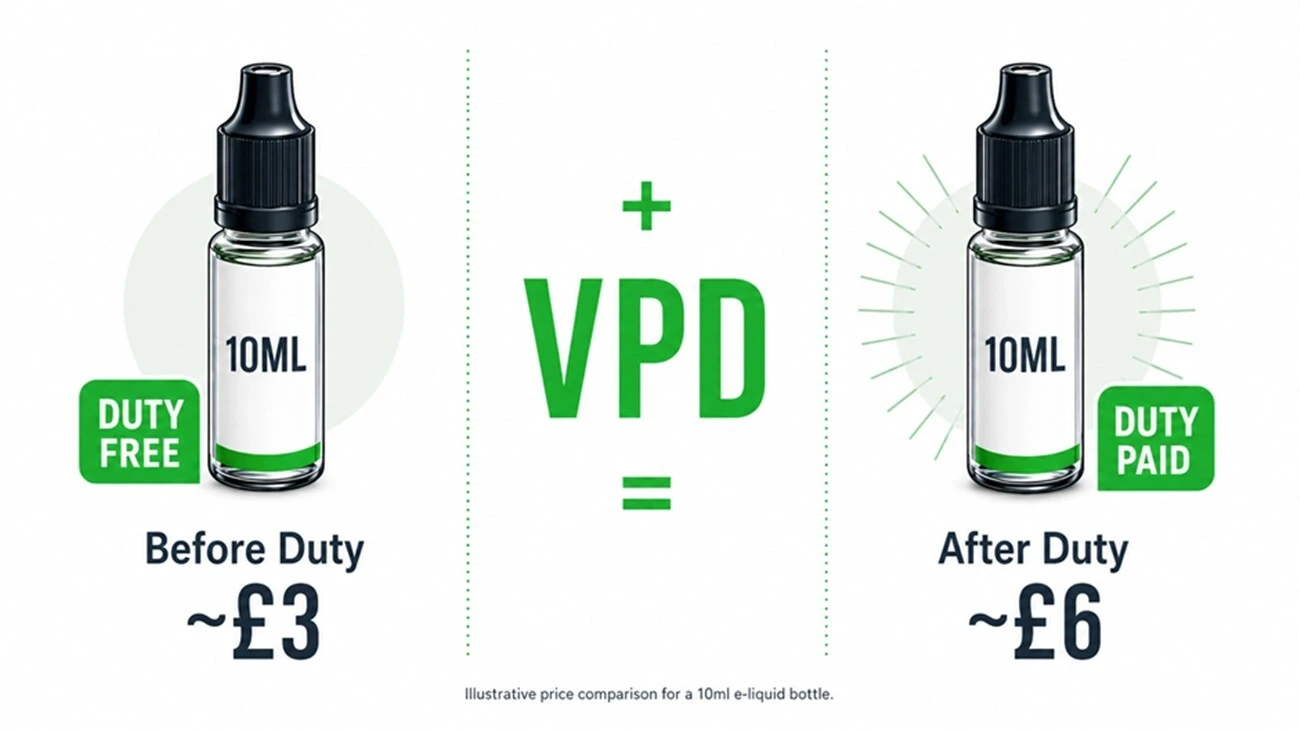
Take a standard 10ml bottle of e-liquid. At Go Smoke Free, many of these currently sell for around £2.99 to £3.99. The original calculations prepared for this guide show how significantly that could change once the new tax is introduced.

A 10ml bottle attracts £2.20 in Vaping Products Duty, with the additional VAT impact taking the total tax effect to £2.64. If nothing else about the product's cost changed, a bottle currently selling for £2.99 would therefore reach around £5.63, while a £3.99 bottle would reach approximately £6.63.

There's an important distinction to make here. These aren't predictions of our final October prices. They're examples showing what today's prices would look like if we added the new tax impact alone.

The eventual retail price will depend on more than VPD, which is something we'll explore in more detail throughout this guide.

What Does the Vape Tax Look Like Across Different Products?

The effect becomes particularly interesting when you compare different ways of vaping, because a flat per-millilitre duty naturally has a much greater impact on products containing larger quantities of liquid.

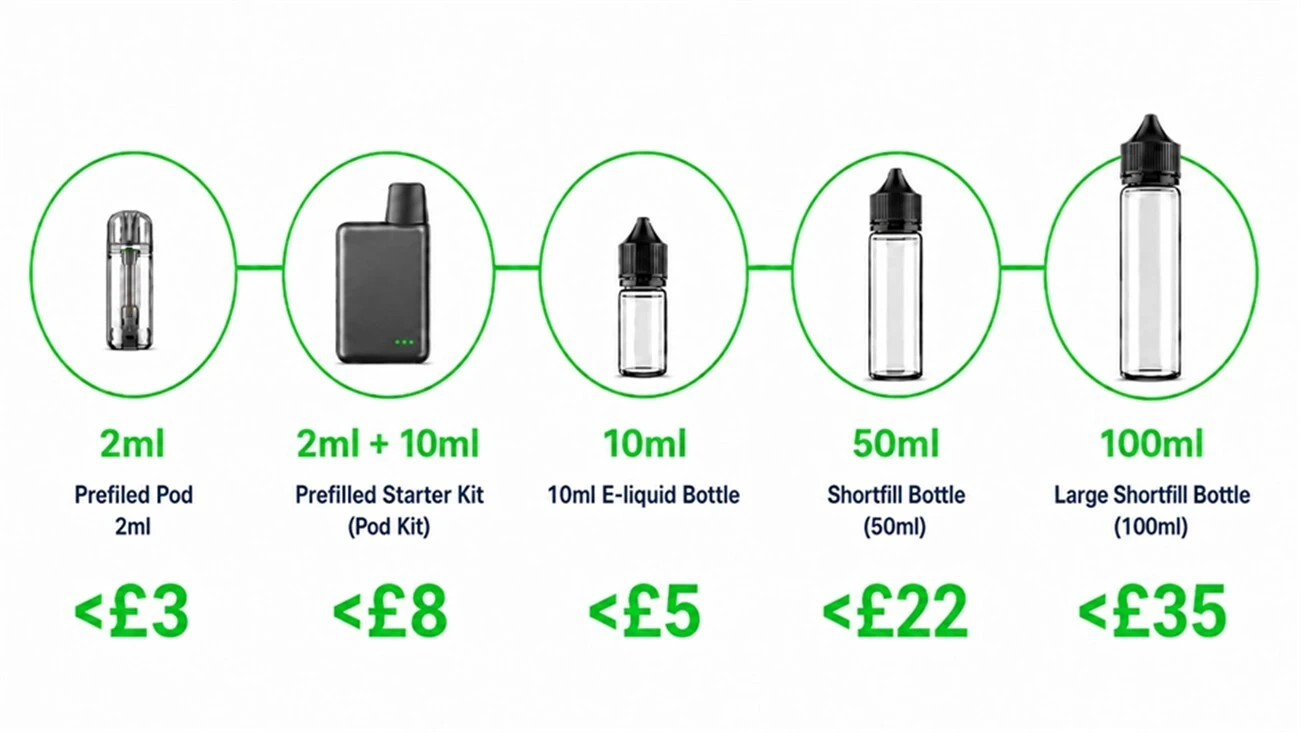
2ml prefilled pods

A standard 2ml pod attracts 44p in VPD, which becomes an additional 52.8p once the VAT impact is included.

On an individual pod, that may not sound enormous. Regular users of prefilled systems tend to buy replacement pods or refill packs repeatedly, however, so those smaller increases quickly become part of the ongoing cost of vaping.

10ml e-liquid

A 10ml bottle attracts £2.20 in VPD, with the tax impact increasing to £2.64 including VAT. For anyone who regularly buys several bottles at once, this is likely to be one of the most immediately noticeable changes, particularly when existing multibuy deals have to be rebuilt around the new cost.

50ml shortfills

A 50ml shortfill attracts £11 in Vaping Products Duty. Once the VAT impact is included, the additional tax reaches £13.20 before any other changes in manufacturing, supply or retail costs are considered.

100ml shortfills

This is where the volume-based nature of VPD becomes impossible to ignore. A 100ml shortfill attracts £22 in duty, increasing to a £26.40 tax impact with VAT included.

Nic shots also contain vaping liquid and will be taxed separately, which is particularly relevant when they're currently bundled with shortfills at little or no additional cost. 

We'll look at shortfills separately in the next part of this guide because they're one of the areas where the structure of VPD could have the most noticeable consequences.

Why Can't Vape Retailers Simply Absorb the New Duty?

This is an important part of the change that we think customers deserve some transparency around.

VPD isn't an optional surcharge that Go Smoke Free, or another vape retailer, simply decides to add at checkout. The duty becomes payable when vaping products reach the relevant duty point, such as when they're released for UK consumption after manufacture or import, unless they're being held under an approved duty-suspension arrangement.

By the time newly taxed stock moves through the supply chain to a retailer, VPD has therefore become part of the underlying economics of that product.

Retailers will still compete on price, promotions and margins, just as we do now, but every compliant business is operating within the same duty framework. The increase caused by VPD isn't something an individual retailer can simply opt out of applying.

Why We Can't Tell You Exact October Vape Prices Yet

We can be very precise about one part of the October change: Vaping Products Duty will be £2.20 per 10ml, or 22p per ml. What we can't responsibly do is tell you exactly what every bottle of e-liquid, shortfill or refill pack will cost once the new system has settled.

Manufacturers and importers are preparing for new approval, duty-payment, stamping and record-keeping requirements, while retailers and wholesalers will also have additional responsibilities around purchasing records, supplier checks and verifying legitimate stamped products.

Those changes create costs and operational pressures beyond the duty itself, and we don't yet know exactly how each manufacturer, distributor or retailer will absorb or pass them through.

Some products may eventually sit quite close to a simple current price + duty + VAT calculation. Others could rise further as the wider cost of compliance, packaging and distribution works its way through the supply chain.

That's why we'd be cautious about anyone claiming to know exact post-VPD retail prices several months in advance. The tax rate is confirmed; the final shelf price is not.

How Big a Change Are We Really Looking At?

The answer depends considerably on how you vape. Someone occasionally replacing a 2ml pod won't experience VPD in quite the same way as somebody buying several bottles of e-liquid every week. For shortfill users, the difference becomes more pronounced again because the duty is calculated purely by liquid volume, meaning larger bottles attract significantly more tax.

This is also why looking only at the headline rate of 22p per ml doesn't tell the whole story. Vaping is made up of very different product formats and buying habits, so the financial impact won't feel identical for everyone.

The government's stated aim is to reduce the affordability and appeal of vaping, particularly among young people and non-smokers, while maintaining a financial incentive for smokers to choose vaping over smoking. A separate increase to tobacco duty is being introduced alongside VPD in an attempt to preserve that price difference.

The question for existing vapers is what all of this means in the real world.

What Will the Vape Tax Mean for Vapers?

Understanding the 22p-per-ml duty is one thing, but for most people the more important question is what happens when they next need to buy their usual e-liquid, shortfill or refill pack.

The answer won't be exactly the same for every vaper. Because VPD is based on liquid volume, its impact becomes progressively larger as you move towards products containing more e-liquid. It could also change some of the pricing structures we've become accustomed to across the UK vape market, including multibuy offers and the traditionally low cost per millilitre of larger shortfills.

Here's where we think vapers are most likely to notice the difference.

Why Will Shortfills Be Hit Particularly Hard?
Shortfills have traditionally been one of the most economical ways to buy larger quantities of e-liquid, particularly for people using higher-powered refillable vape kits.

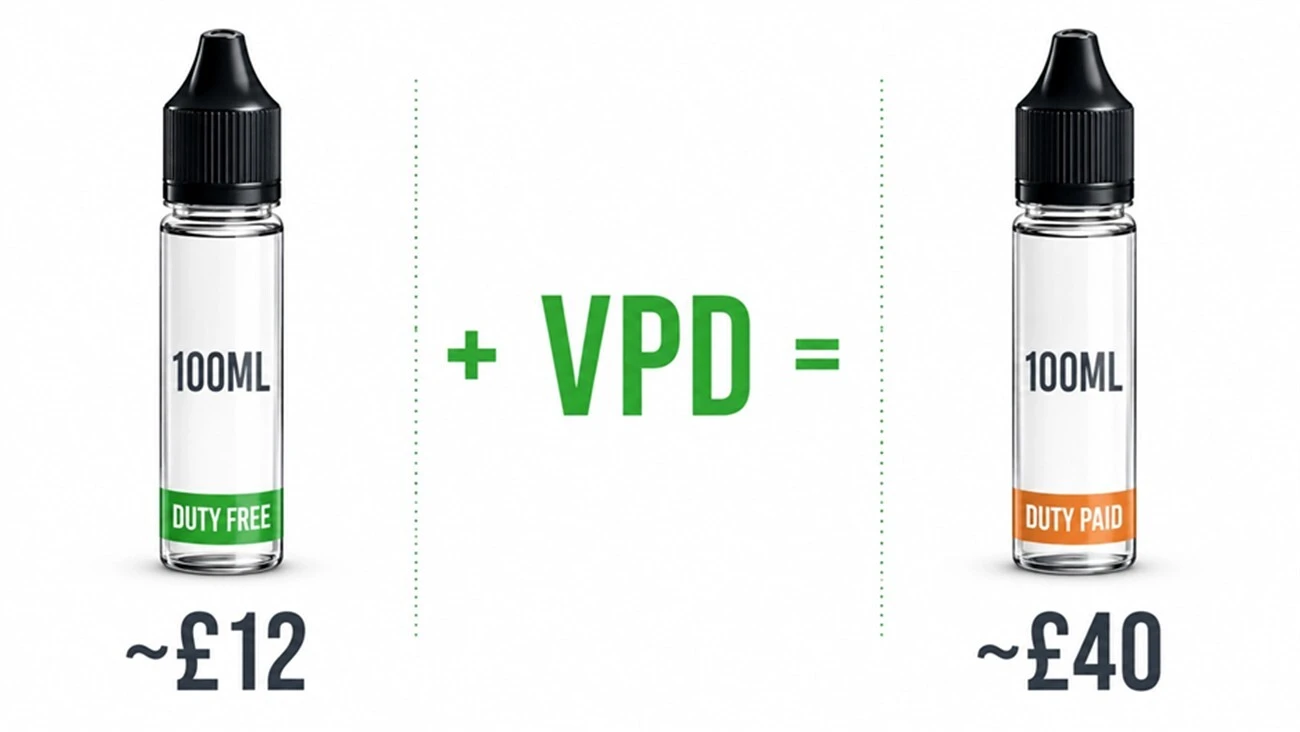
A 50ml or 100ml bottle usually costs considerably less per millilitre than buying the equivalent amount in individual 10ml bottles. Under VPD, however, the duty itself doesn't become cheaper simply because you're buying a larger bottle. Every millilitre is taxed at the same 22p rate.

For a 50ml shortfill, that means £11 in VPD before the VAT impact is considered. For a 100ml shortfill, the duty alone reaches £22, with our earlier calculation putting the combined duty and VAT impact at £26.40.

Using current Go Smoke Free prices helps put that into perspective. A 100ml shortfill that currently costs around £9.99 to £11.99 would reach approximately £36.39 to £38.39 if we applied only the additional £26.40 tax impact to today's price. These aren't confirmed future prices, but they demonstrate just how significant a volume-based duty could be for this part of the market.

There is another cost to consider for anyone who adds nicotine. Nic shots are vaping liquid too, so they fall within the scope of VPD rather than remaining an untaxed addition to a shortfill.

For vapers who currently choose larger bottles because they offer better value, this could be one of the biggest adjustments to get used to after October.

What Could Happen to Vape Multibuy Deals?
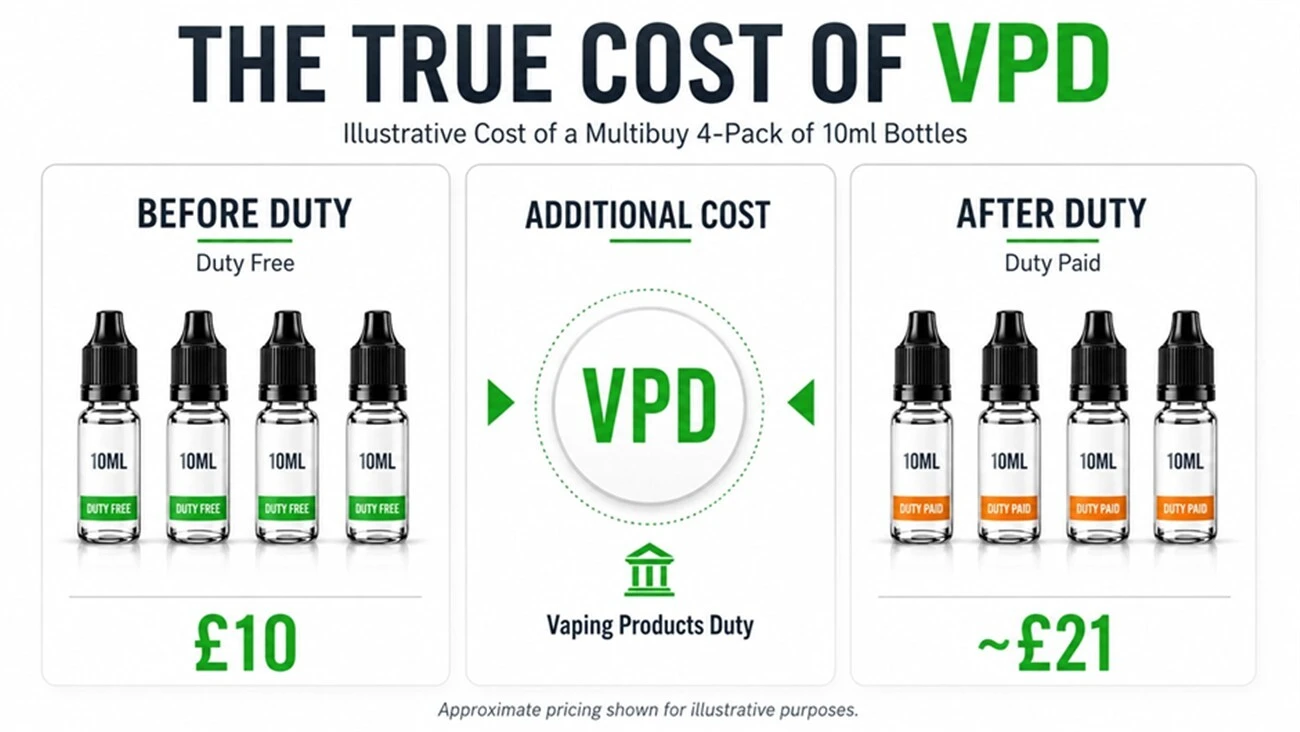
Multibuy offers have become a familiar part of buying 10ml e-liquids in the UK, with deals such as 5 for £10 allowing regular users to reduce the cost of buying several bottles at once.

The new duty makes deals at those levels very difficult to maintain.

Five 10ml bottles contain 50ml of vaping liquid, so the VPD alone would total £11. Once the VAT impact is included, the additional tax burden reaches £13.20 across those five bottles.

If we applied that increase directly to an existing 5 for £10 offer, the equivalent would become roughly 5 for £23.20, rather than simply increasing by a pound or two.

This doesn't necessarily mean multibuy deals will disappear. Retailers will still want to provide value where possible, while manufacturers may rethink pack formats, promotions and wholesale pricing as the market adapts. What seems much less realistic is expecting today's heavily discounted e-liquid deals to continue unchanged once every 10ml bottle carries an additional £2.20 of excise duty.

What Could Happen to Your Monthly Vaping Costs?

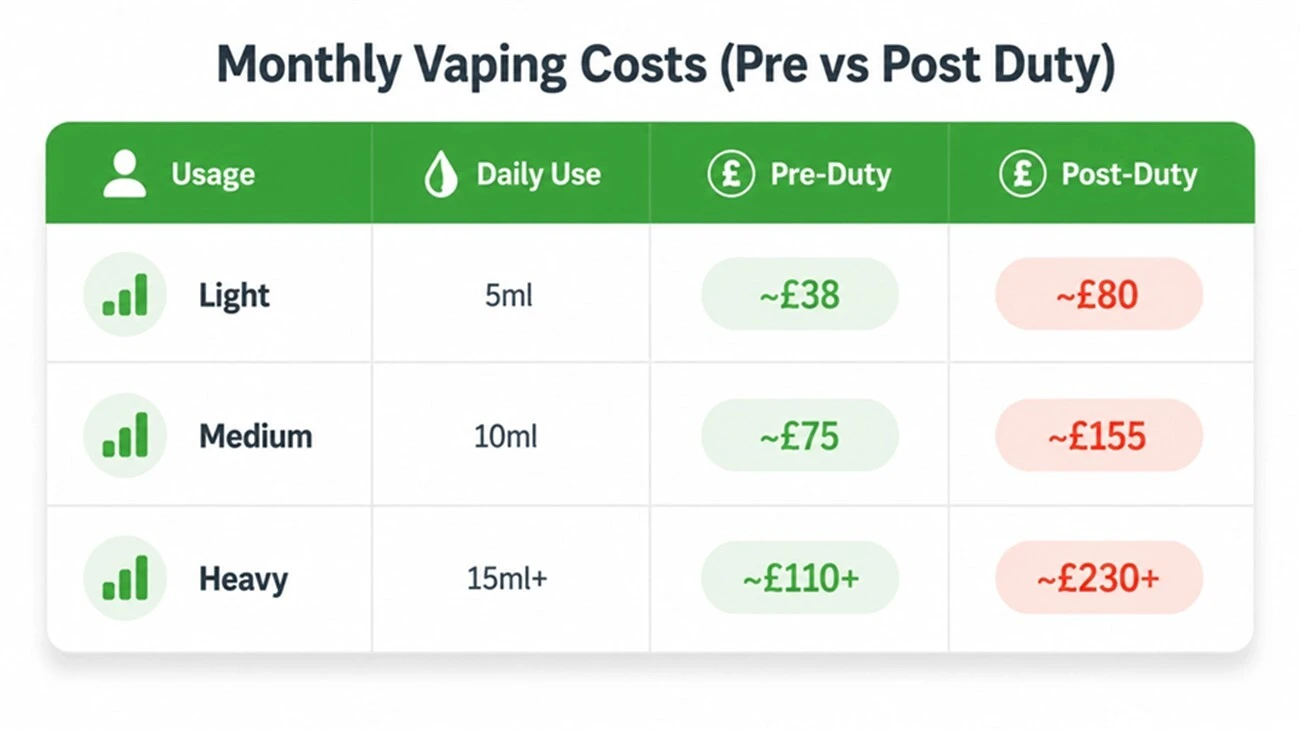
The impact becomes clearer when you look beyond one bottle or pod and consider how much vaping liquid you might buy across an entire month. How noticeable the increase becomes will depend heavily on the products you use:

10ml e-liquid users: The additional £2.20 duty applies to every 10ml bottle, making regular purchases and multibuy orders noticeably more expensive.

Shortfill users: Larger bottles attract substantially more duty in a single purchase because VPD is calculated entirely according to liquid volume.

Prefilled pod users: The increase on an individual 2ml pod is smaller, but the additional cost accumulates as you replace pods and refill containers.

Occasional vapers: People who consume relatively little e-liquid each month will naturally see a smaller overall increase.

There isn't a single figure we can give for how much more vaping will cost each month, but looking at approximately how many millilitres of e-liquid you currently use provides a useful starting point.
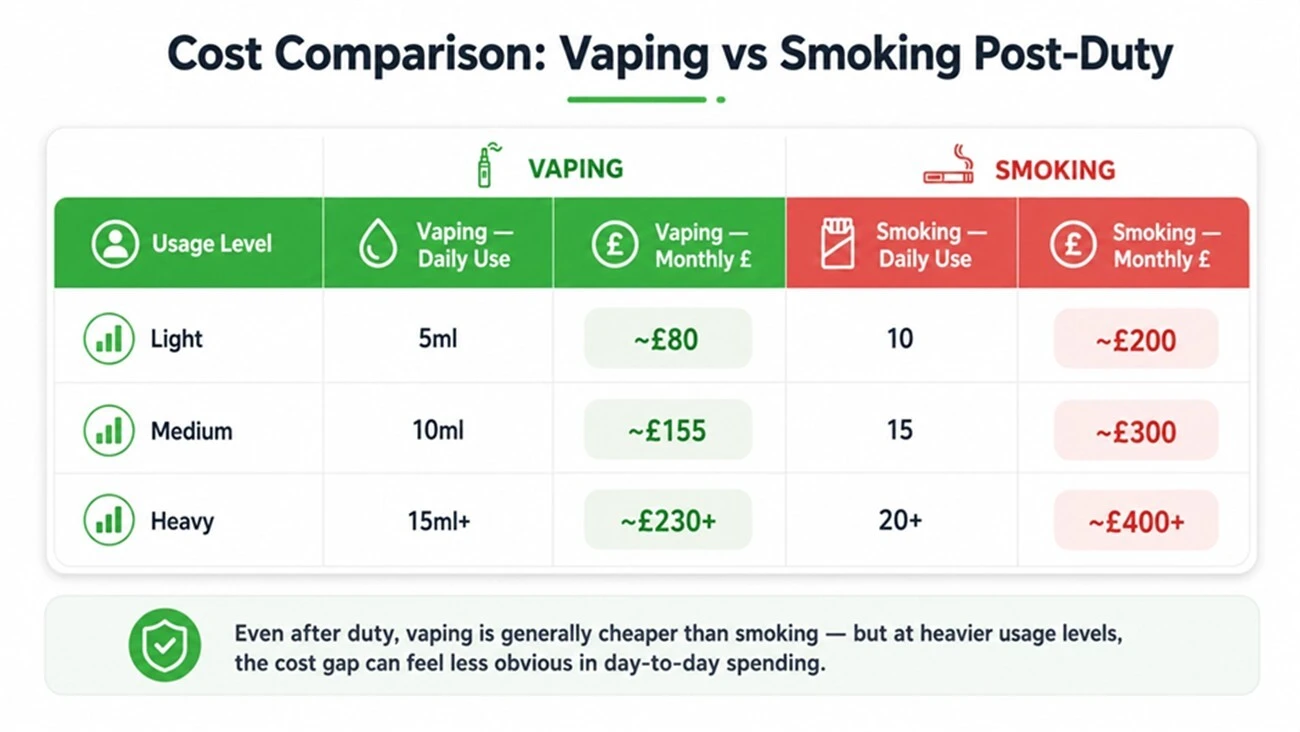
Will Vaping Still Be Cheaper Than Smoking?

This is probably the most important question surrounding the new tax, particularly for people who originally switched to vaping from cigarettes.

The government's intention is that it should remain financially preferable to vape rather than smoke. When VPD takes effect on 1 October 2026, tobacco duty will also increase, including an additional one-off rise designed specifically to preserve the price difference between vaping and tobacco products. HMRC states that this measure is intended to maintain the financial incentive to choose vaping over smoking.

Whether vaping remains cheaper for an individual will naturally depend on what they vape and what they previously smoked. Based on the information currently available, however, there is no reason to suggest that VPD suddenly removes the financial advantage of switching from cigarettes altogether.

There is an important wider point here too. Vapes are not risk-free and people who don't smoke shouldn't start vaping, but the government continues to recognise vaping as a less harmful alternative to smoking and has explicitly designed the accompanying tobacco duty increase to preserve a financial incentive for smokers to switch.

For Go Smoke Free, maintaining that distinction matters. Increasing the cost of vaping shouldn't result in smokers concluding that there is little financial reason to make the switch, nor should existing vapers who have moved away from cigarettes feel pushed back towards tobacco.
Why Won't Prices Simply Rise by 26.4p Per ml?

Throughout this guide, we've used 26.4p per ml to demonstrate the combined impact of the 22p duty and VAT. It's a useful baseline for understanding the tax, but it shouldn't be mistaken for a guaranteed retail price increase.

Several other factors could influence what eventually appears on the shelf.

Manufacturing and importing

Businesses responsible for manufacturing or importing liable vaping products will have new requirements surrounding VPD registration, duty payments, stamps and record keeping. These changes require new processes and potentially create additional costs beyond the duty itself.

Distribution

Wholesalers and distributors will be operating in a market where taxed products have a significantly different cost base. The transition period could add another layer of complexity as older stock and newly duty-paid products move through the supply chain at the same time.

Retail compliance

Vape retailers also have responsibilities around sourcing legitimate products, checking duty stamps and maintaining appropriate purchasing records. HMRC provides more detail on these requirements in its guidance for businesses selling vaping products in the UK.

Competition and margins

Manufacturers, wholesalers and retailers may choose to absorb some additional costs or adjust their margins, while competition between businesses will continue to influence final prices.

This is why we think there needs to be a clear distinction between calculating the tax and predicting the final price. We know exactly how much VPD will be charged per millilitre, but the eventual retail price depends on how the wider UK vape industry adapts.

What Can Ireland Tell Us About Vape Tax?

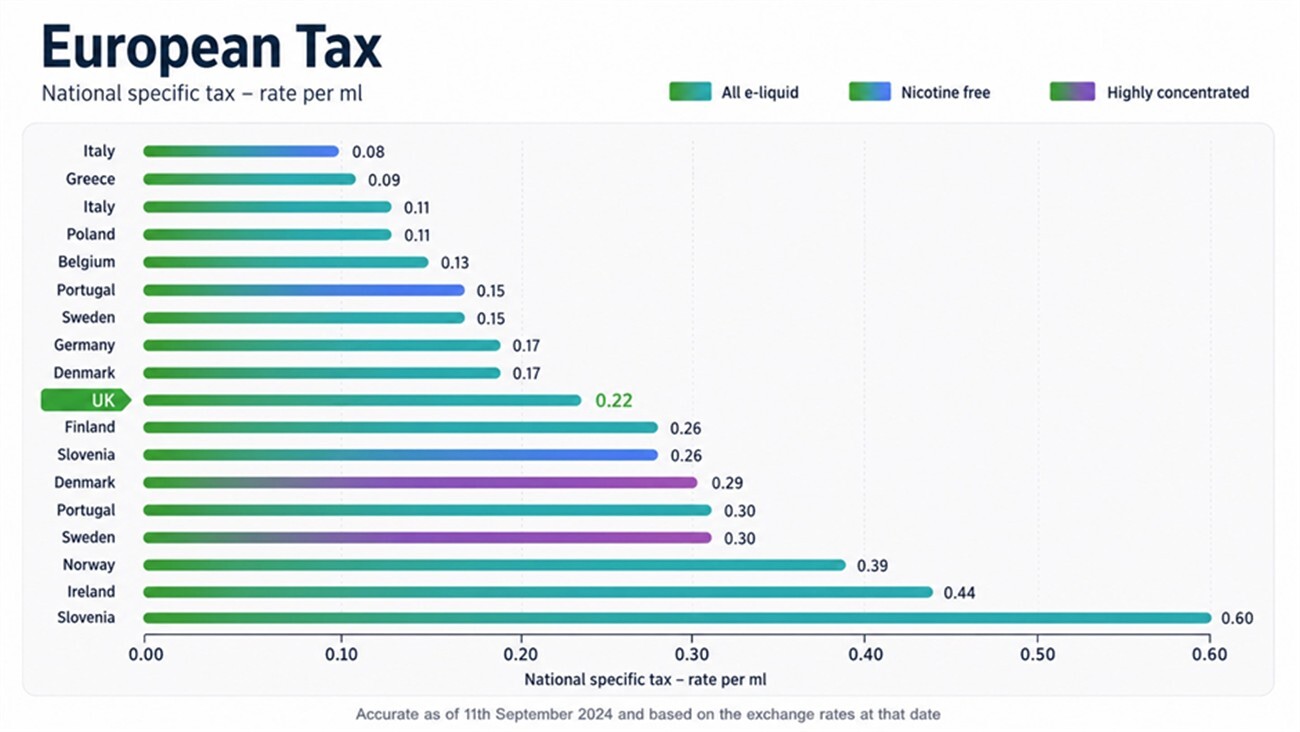
Ireland gives us a useful comparison because it introduced its own E-liquid Products Tax (EPT) on 1 November 2025, although there are important differences between the two systems.


  UK VPD Irish EPT
Introduction 1 October 2026 1 November 2025
Tax rate 22p per ml €0.50 per ml
Nicotine-free liquid included? Yes Yes
Based on nicotine strength? No No
Based on liquid volume? Yes Yes


Ireland's tax rate is considerably higher than the one being introduced in the UK, so we shouldn't assume that prices or consumer behaviour here will follow exactly the same pattern.

The original research supplied for this guide highlights reports of significant price increases following the Irish tax, including 10ml bottles moving from around €4.50 towards €10. We haven't found an official source confirming those specific figures across the wider Irish market, so we wouldn't present them as an established national price change.

What Ireland does demonstrate very clearly is how quickly a per-millilitre tax adds up. At €0.50 per ml, the excise element alone adds €5 to a 10ml bottle before the rest of the retail price is considered.

Ireland's Revenue has published its own E-liquid Products Tax guidance for anyone interested in how its system operates.
The Go Smoke Free View: Price Isn't the Only Issue

We understand the reasoning behind introducing VPD. Vaping products shouldn't be marketed towards children or non-smokers, and responsible retailers have an important role to play in ensuring these products remain intended for people who already smoke or vape.

Our concern is what happens if the cost gap between legal, regulated vaping products and other options becomes too narrow.

For smokers considering switching, price has always been one of several reasons to move away from cigarettes. For existing vapers, particularly those who previously smoked, a significant increase in the cost of e-liquid changes a household expense that may already have been carefully budgeted.

The government has recognised this risk by increasing tobacco duty alongside VPD specifically to preserve the financial incentive to choose vaping over smoking. Maintaining that distinction will be important as the policy beds in, particularly if the real-world cost of compliant vaping products rises beyond the duty calculation itself.

Affordability isn't the only concern, either. If legitimate products become substantially more expensive, unusually cheap alternatives may become more attractive to some consumers. Effective enforcement and responsible retailing will therefore become increasingly important, because a functioning vape duty system can't rely solely on compliant businesses and customers following the rules while illicit sellers operate outside them.

Enforcement, The Vape Market & What Happens Next

By this point, we know what Vaping Products Duty will cost and where vapers are most likely to feel the increase. The final piece of the puzzle is how the new system will actually work once 1 October 2026 arrives.

This isn't simply a case of increasing the price of e-liquid overnight. The UK is introducing a new duty stamp system alongside VPD, existing stock needs time to move through shops, and retailers will have new responsibilities when sourcing the products they sell. For customers, that could make the first six months of VPD look slightly confusing!

What Happens From October 2026? A Timeline

Over the last few years, the vaping industry has changed considerably, from the emergence of new products and technologies to the disposable vape ban. 
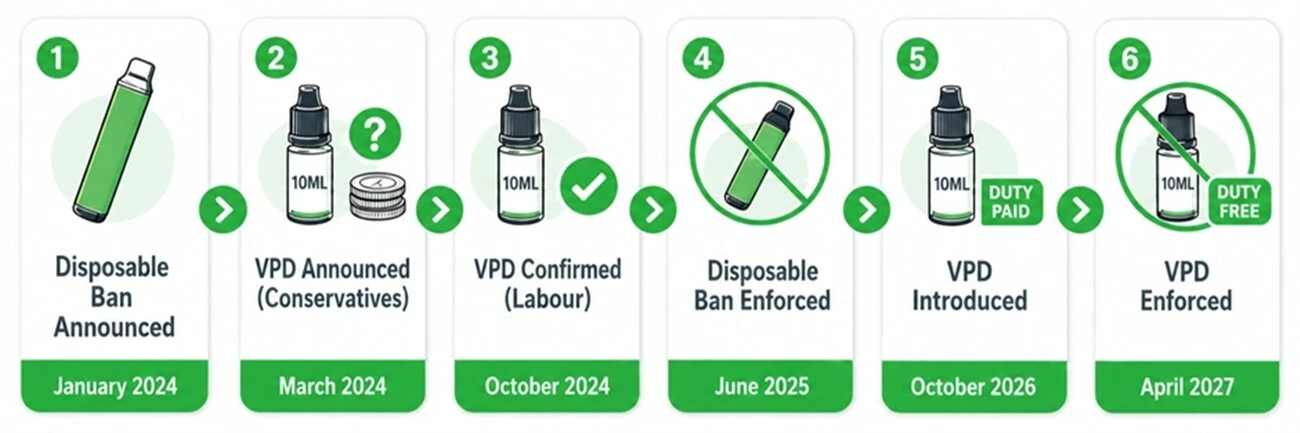
With the VPD, there are two dates that vapers really need to understand.

Before 1 October 2026

Products already manufactured or imported before the introduction of VPD can form part of the existing pre-duty stock held throughout the UK supply chain.

Retailers are currently being advised by HMRC to review their stock and speak to suppliers about how compliant products will be supplied once the new rules begin.

1 October 2026: VPD begins

From this date, newly liable vaping products released onto the UK market must have the appropriate vaping duty stamp and VPD must be accounted for.

Retailers can, however, continue selling legitimate unstamped stock that was produced or imported before 1 October 2026 during the transition period.

Following this, the next key dates for vapers to keep track of are as follows:

31 March 2027: Transition period ends

This is the final day on which qualifying unstamped pre-October stock can remain on general sale. Retailers will need to make sure any remaining unstamped stock has been sold, returned to suppliers or otherwise dealt with lawfully.

1 April 2027: Stamps become mandatory across retail stock

From this point onwards, all vaping products held outside duty suspension must carry a vaping duty stamp, regardless of when they were originally produced or imported. Retailers must not continue selling unstamped products. 

Why Could Vape Prices Vary During the Transition?
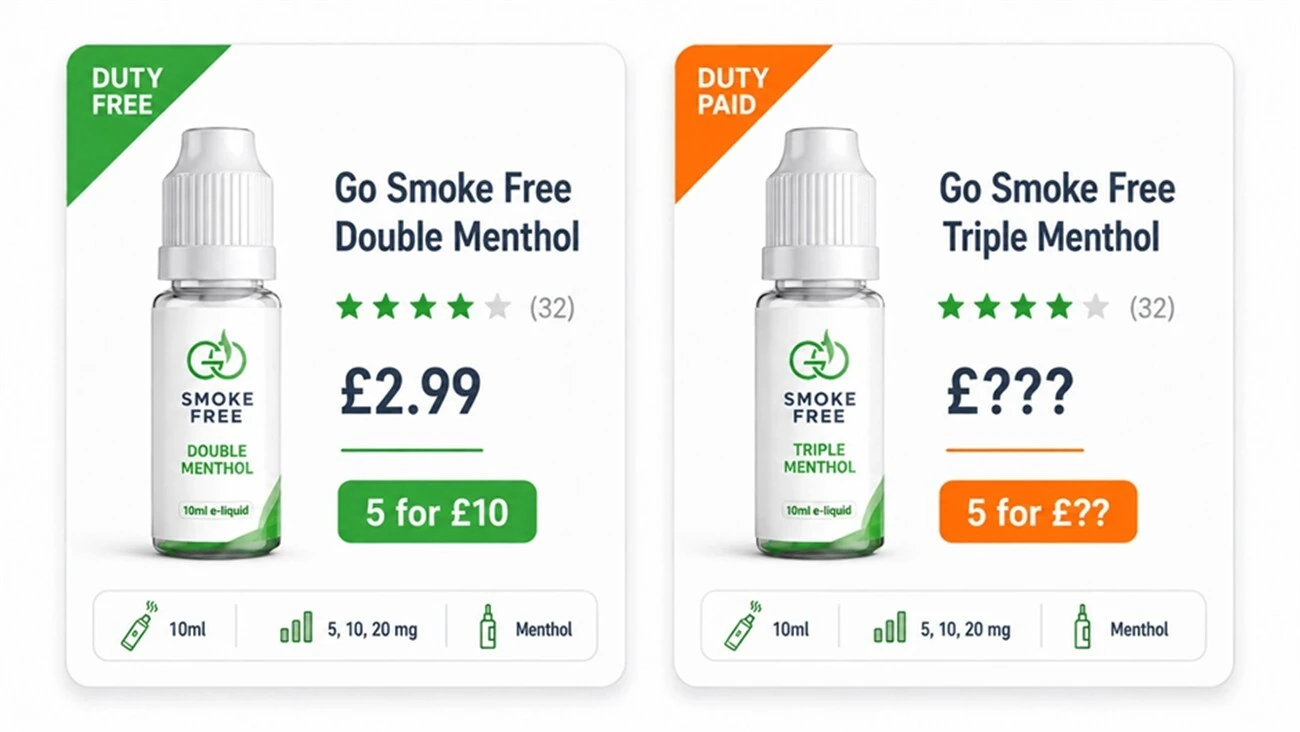
This is where things could get a little strange for customers.

Imagine you visit a vape shop in November 2026 and find two flavours from the same e-liquid range at different prices. One might be older stock manufactured before VPD came into force, while another could be newly produced stock that has already entered the market under the new duty system. That doesn't necessarily mean the retailer has made a pricing mistake.

During the six-month transition period, legitimate pre-duty stock can exist alongside newer duty-paid products. Retailers may therefore have stock with very different underlying costs sitting on the shelf at the same time.

The same situation could potentially affect:

  • Different flavours within one e-liquid range.
  • Different nicotine strengths.
  • Shortfills.
  • Prefilled pods and auto-refill containers.
  • Different batches of otherwise identical products.

How individual retailers handle those differences will vary, so we can't predict exactly what customers will see. However, it's worth being aware that prices may not change uniformly across every product on 1 October.

By April 2027, the picture should become considerably clearer as the transition period ends and the new system applies across retail stock.

What Are Vaping Duty Stamps?

Duty stamps are one of the main ways HMRC plans to identify products that have entered the legitimate UK duty system.

The stamp must be attached to the outermost retail packaging and positioned so the packaging can't be opened without damaging either the stamp or the packaging. The permanent digital system will also allow prescribed product and supply-chain information to be captured as products move through the system.

For customers, you don't need to understand all of the technology behind them. The important point is that duty stamps will become another way to distinguish products supplied through legitimate channels.

HMRC's guide to how vaping duty stamps work explains the system in more detail.

How Will the New Vape Tax Be Enforced?

The duty stamp scheme isn't simply an administrative exercise. HMRC has been given enforcement powers covering businesses that manufacture, import, supply or sell vaping products outside the new rules.

From 1 April 2027, HMRC says it may seize unstamped goods, issue financial penalties and, in the most serious cases, carry out criminal investigations. Businesses dealing in unstamped retail vaping products can face escalating penalties of up to £10,000, depending on the quantity involved and previous offences.

For legitimate vape retailers, that means knowing where products have come from becomes even more important.

HMRC advises retailers buying new stock to check:

  • Whether a required vaping duty stamp is present.
  • Whether the stamp is correctly attached to the outer retail packaging.
  • Where the products came from.
  • Whether a supplier can provide normal commercial records, including invoices and delivery notes.
  • Why any unstamped product offered during the transition period is legally exempt from needing a stamp.

If a retailer can't satisfy themselves that stock is legitimate, HMRC's guidance is clear that they shouldn't buy, supply or sell it.

Could Higher Vape Prices Encourage Illegal Sales?

This is one of the areas we'll be watching particularly closely after October.

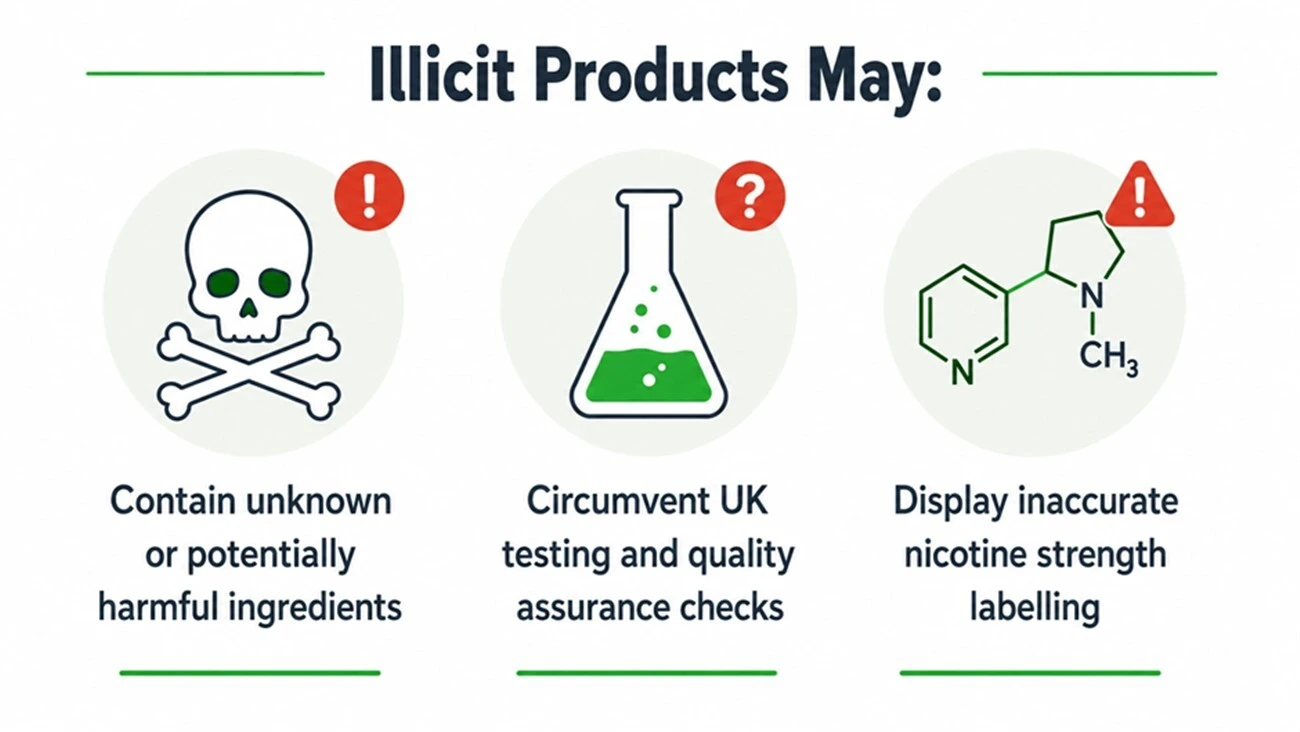
The legal vape market already competes with illicit and non-compliant products. If VPD creates a significant new price difference between products that have had UK duty paid and those being sold outside the legitimate supply chain, there is an obvious risk that suspiciously cheap products become more attractive.
That doesn't mean every discounted vape should suddenly be treated as illegal, particularly during the transition period when legitimate pre-duty stock remains on sale. It does mean price needs to be considered alongside where you're buying from and what you're buying.

Be cautious if:

  • A post-transition product that should carry a duty stamp doesn't have one.
  • The packaging looks altered, damaged or inconsistent.
  • A retailer can't provide basic information about the product.
  • Products appear to fall outside UK vaping regulations.
  • Prices seem unusually low without any obvious explanation.
  • You're being encouraged to buy through informal or unverified sellers rather than an established retailer.

Price alone doesn't prove that a product is illicit, but an unusually cheap product combined with other warning signs should give you reason to think twice.
What About DIY E-Liquid?

VPD could also change the economics of mixing e-liquid at home. HMRC states that VPD can apply to substances intended for vaping, including ingredients such as propylene glycol (PG), vegetable glycerine (VG) and flavourings when supplied for that purpose.

This means DIY mixing shouldn't automatically be viewed as a simple way around VPD. It also requires considerably more knowledge and care than buying ready-made e-liquid, particularly where nicotine is involved. For most vapers who value convenience and consistency, commercially produced e-liquid from a reputable supplier is likely to remain the more straightforward option.

What Does VPD Mean for Vape Retailers?

From our side of the counter, VPD represents considerably more than changing a few prices on 1 October.

Retailers need to understand which stock can legally be sold during the transition, work closely with suppliers, check duty stamps where required and retain the records needed to demonstrate that products have entered the legitimate supply chain. HMRC specifically advises retailers to review their stock levels before October and speak with suppliers about how they intend to provide compliant products.

There is also a commercial challenge. Customers will understandably want to know why familiar products suddenly cost more, why one flavour might temporarily cost more than another and whether they're still getting good value.

For responsible retailers, we think transparency is going to matter. We won't be able to control the tax being introduced, but we can explain what has changed, keep pricing as competitive as possible and make sure the e-liquids, prefilled pod kits, prefilled pods and other vape products we sell continue to come through legitimate UK supply channels.

How Can Vapers Prepare for October 2026?

There's no need to make dramatic changes to the way you vape simply because VPD is approaching. There are, however, a few sensible things worth considering before the new system comes into force.

1. Understand how much liquid you currently use.

Knowing roughly how many millilitres you get through each week or month will give you a much better idea of how VPD could affect your spending than looking at the headline 22p rate alone.

2. Look at the overall running cost of your device.

The cheapest kit isn't necessarily the cheapest setup over several months. Replacement pods, refill containers, bottled e-liquid and how quickly you consume them all contribute to the real cost.

3. Expect prices to change at different times.

The transition period means not every product will necessarily jump to a new price on 1 October. Older stock may remain available alongside newly taxed products until the end of March 2027.

4. Buy from retailers you trust.

Once the price difference between taxed and untaxed products becomes more significant, knowing that you're buying legitimate, compliant stock matters even more.

5. Don't return to smoking because vape prices increase.

If you originally switched from cigarettes, it's worth remembering why you made that change. Vaping is not risk-free, but UK health guidance continues to recognise it as substantially less harmful than smoking.

Buying Vape Products Safely After VPD

The introduction of duty stamps should ultimately make the legitimate supply chain easier to identify, but customers still have a role to play. Buying from an established UK vape retailer gives you greater confidence that the products you're using have been sourced through recognised channels and comply with the rules that apply to the UK market. From April 2027, checking for the appropriate duty stamp will provide another useful indicator.

We'd be particularly wary of viewing exceptionally cheap products as a bargain without asking why they're so inexpensive. Saving a few pounds isn't worthwhile if you have no confidence in where a product came from, what it contains or whether it complies with UK requirements.

The Go Smoke Free View: What Happens Next?

Vaping in the UK has changed significantly over the last few years, and VPD is another major step in that process.

We support sensible regulation that keeps vape products away from children, tackles illegal products and maintains appropriate standards across the industry. At the same time, regulation needs to preserve the reason vaping exists in the first place: providing smokers with access to a less harmful alternative to cigarettes.

The real test of VPD therefore won't simply be how much tax it raises. It will be whether the UK can increase oversight of the vape market without making legitimate vaping prohibitively expensive, encouraging illicit sales or weakening the incentive for smokers to move away from tobacco.

From 1 October 2026, Go Smoke Free will continue adapting alongside the rest of the regulated UK vape industry. We'll keep sourcing products through legitimate supply channels, explaining regulatory changes clearly and doing what we can to keep our range competitively priced as the new duty works its way through the market.

Keeping You Updated

There are still details to emerge as the Vaping Products Duty gets closer, particularly around final retail pricing and how the wider market will adapt. As soon as we know more, we'll update this guide with the latest information so you can understand exactly what the changes mean for the products you use.

In the meantime, there is no need to panic or make major changes to the way you vape. Go Smoke Free will continue to follow the latest guidance, source compliant products responsibly and keep you informed at every stage as the new rules come into effect.

Adults only (18+)
This website contains adult material and is only suitable for those 18 years or older. Click Enter only if you are at least 18 years of age.
Enter or Exit

Recently Viewed

Top
Have questions?